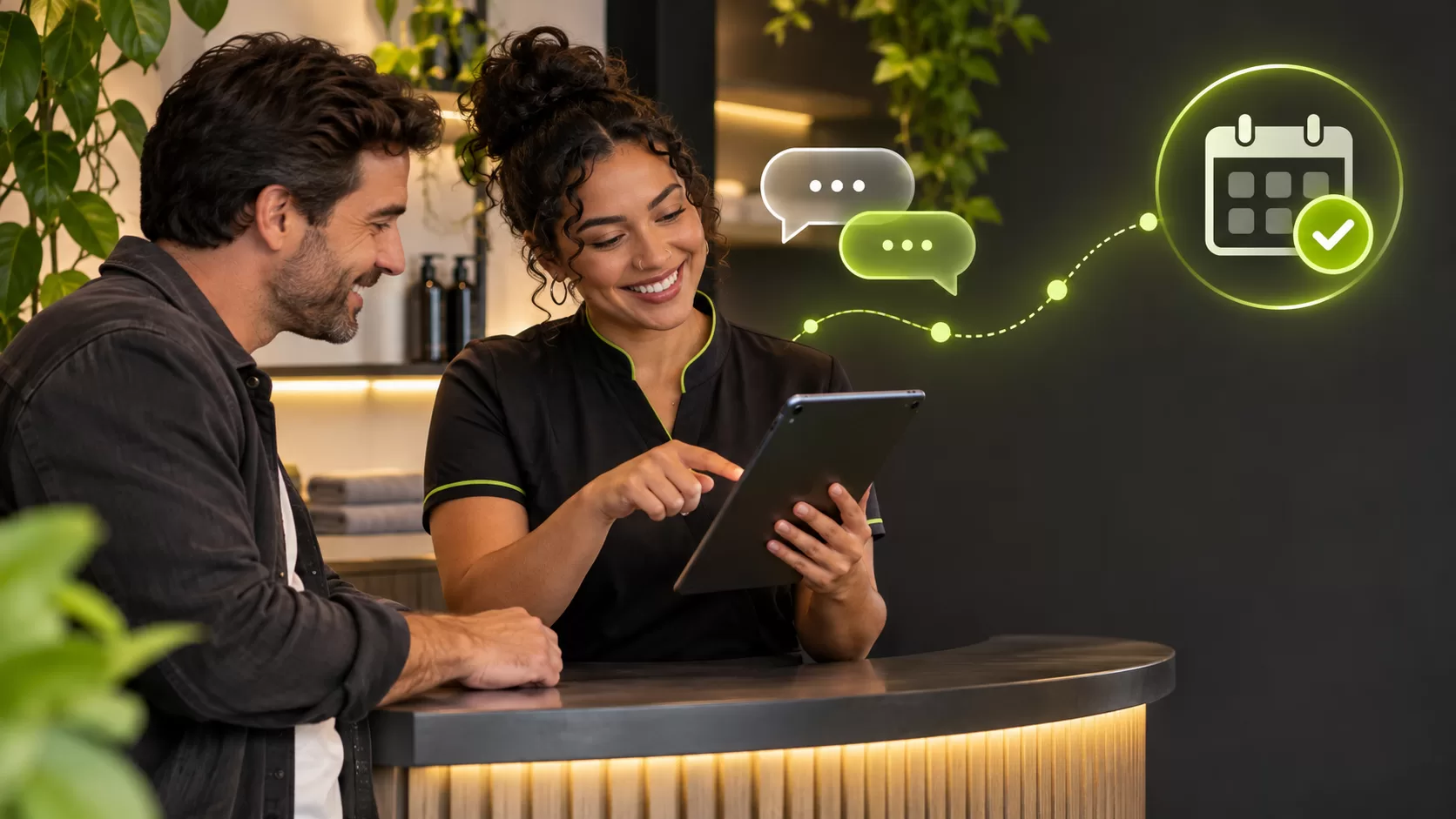
Many companies receive enough inquiries but convert too few of them into appointments. The problem is not always the offer. It often appears in the journey: late responses, repeated questions, incomplete details, forgotten follow-ups, or too many messages just to find an available time.
When you automate follow-up and scheduling, you reduce friction between the first message and a confirmed appointment.
Automating this journey does not mean handing the entire relationship to a machine. It means designing an experience in which technology handles coordination and the human team participates when judgment, expertise, or empathy truly matters.
The journey from conversation to appointment
An effective process usually includes five stages: respond, understand, qualify, schedule, and confirm. If any stage depends entirely on one person's memory or availability, the conversation can stop.
1. Respond while intent is active
The first message should acknowledge the request and provide a clear path forward. An intelligent agent can respond outside business hours, answer initial questions, and explain what information is needed. The person is not left wondering whether the message was received.
2. Understand the need
Not every prospect wants the same thing. A few short questions can identify the service of interest, urgency, location, approximate budget, or any other condition relevant to the business. The conversation should feel natural and request only the information necessary to continue.
3. Qualify without creating a barrier
Qualification should not feel like an interrogation. Its purpose is to confirm whether the company can help and identify the best route. Based on the answers, the system can offer an appointment, share specific information, transfer the case to a specialist, or transparently explain that another solution may be more suitable.
4. Offer real availability
The repeated exchange of “What day works for you?” creates unnecessary delays. An agent connected to a calendar can present available times, respect duration, location, time zone, and buffers between meetings, and register the selected option without creating duplicate bookings.
5. Confirm and reduce no-shows
The process does not end when the appointment is booked. Confirmation should include the date, time, channel or address, and any preparation required. Automated reminders can ask the person to confirm, offer rescheduling, and release a slot in time when attendance is no longer possible.
Following up when the customer has not booked yet
Not everyone is ready during the first conversation. Some people need to consult a colleague, review information, or wait for a particular date. The system can schedule useful, non-intrusive follow-ups based on what was discussed.
A good follow-up remembers the context and proposes one simple action. It must also stop when the person responds, books an appointment, or asks not to receive more messages. Automation without these rules can quickly damage the experience.
When should a person step in?
- When the customer presents a sensitive or complex situation.
- When an exception is requested.
- When commercial negotiation is required.
- When the system does not have enough information to answer safely.
- When the tone shows frustration or the opportunity may be at risk.
The transfer should include the conversation history and collected details so the advisor does not force the customer to repeat everything.
Metrics that show whether the process works
- Average time to first response.
- Percentage of conversations that complete qualification.
- Conversation-to-appointment conversion rate.
- Time required to find an available slot.
- Attendance and rescheduling rates.
- Number of cases correctly escalated to the team.
How Ainoa can help
Ainoa builds intelligent scheduling agents adapted to the rules of each business. They can communicate through WhatsApp, websites, and other channels, check availability, collect information, book appointments, confirm attendance, and organize follow-up.
They can also connect with Custom Managers so the team can see every opportunity, its status, history, and next step. Technology coordinates the process while people retain visibility and control.
Conclusion
Better conversion does not always require more prospects. Sometimes it requires guiding the people who are already reaching out. A fast, clear, consistent process reduces friction between intent and appointment while reserving human attention for the moments that truly require it.
Would you like to turn more conversations into appointments without increasing operational workload? Request an Ainoa demo and let us design the right journey for your business.
Related reading
Continue exploring these Ainoa resources: